Prototype - V2
Improved Push-Cart Micro Shelter
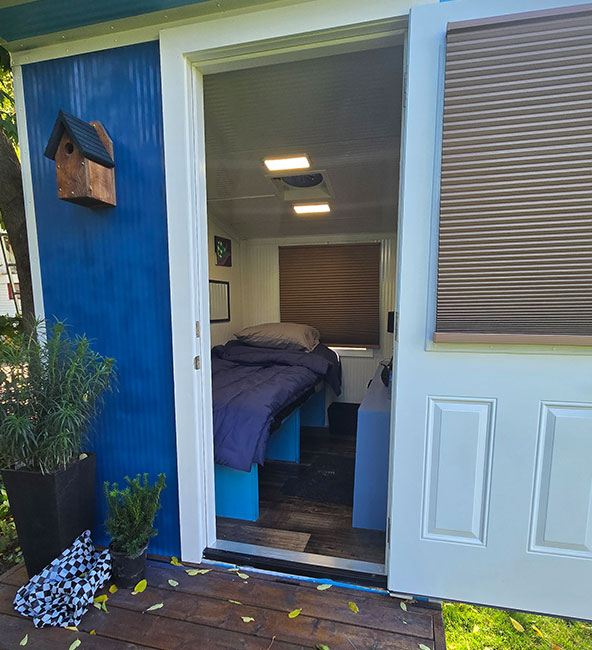
Prototype V2 was created as the next step after the original pedal-powered micro shelter. The goal was to take everything learned from the first build and improve safety, durability, and usability while keeping the same commitment to mobility and off-grid independence.
Refining the Size for Smarter Construction
The footprint of the second prototype was slightly increased. The first unit measured 4 ft by 7 ft, but building at 7 ft created unnecessary material waste. Since most of the construction material came in 8 ft lengths, the new version was updated to use the full sheet.
This resulted in a cleaner build, better structural efficiency, and a more sustainable use of resources.
A Safer Way to Move: From Bicycle to Push Cart
One of the biggest changes in Prototype V2 was the decision to abandon the 700-lb bicycle system. Riding a home of that size and weight on public roads raised clear safety and legal issues.
Turning the unit into a manual push cart solved these concerns and also reduced the overall build cost by nearly $1,000.
The push-cart design remained mobile, but was far safer and far more practical.
Improved Interior Layout and Bed Design
The interior kept the same survival-focused features as Prototype V1 but became much easier to use:
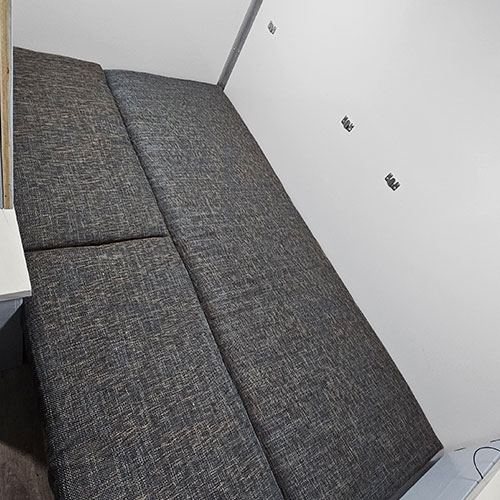
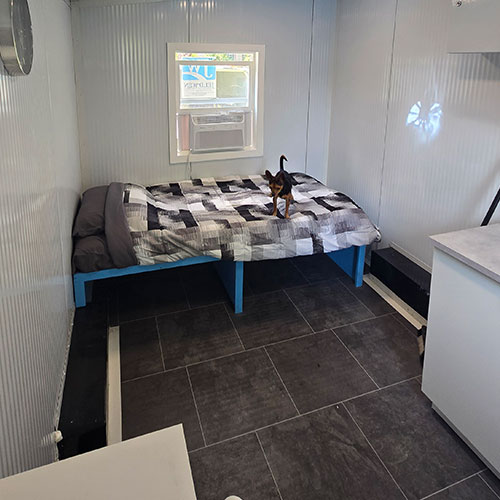
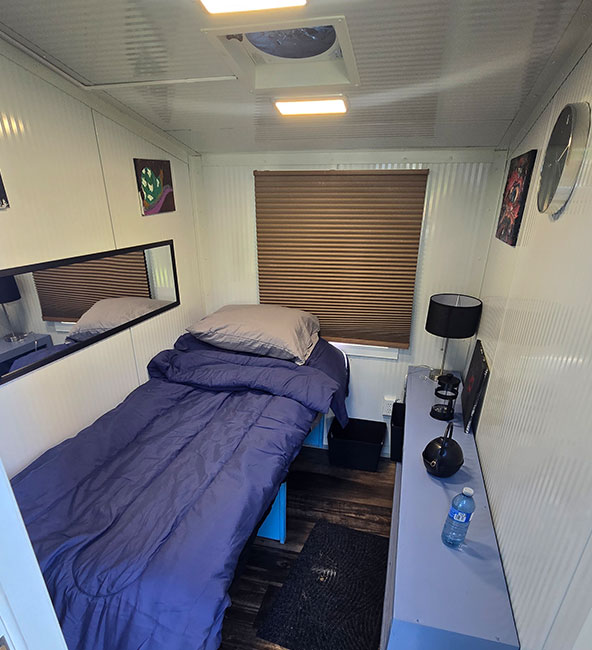
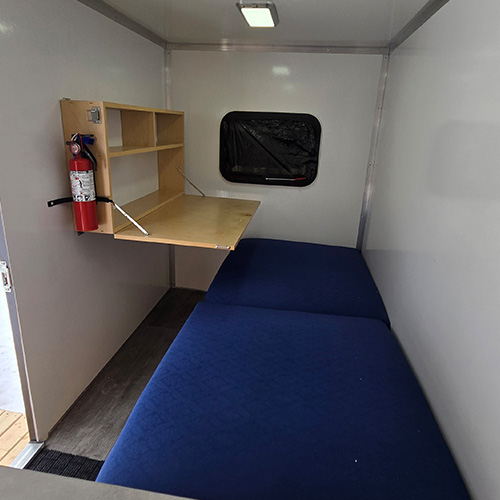
- The bed was widened for better comfort
- The new bed platform was split into two lift-up storage boxes, allowing easier access to the space underneath
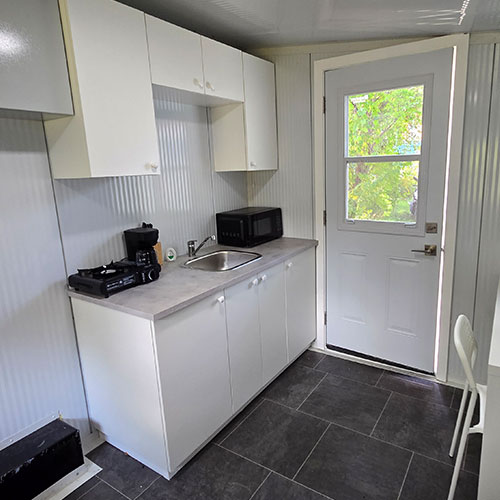
- The layout remained compact but more functional for real, daily use
These small refinements made a noticeable difference in how the unit lived.
Increased Solar Power and Off-Grid Capability
Prototype V2 doubled its solar capacity from 200 watts to 400 watts.
This upgrade made the electrical system more reliable, especially for lighting, small devices, and general day-to-day functionality.
The unit kept the same essential features as the first prototype:
- Solar power
- Diesel furnace
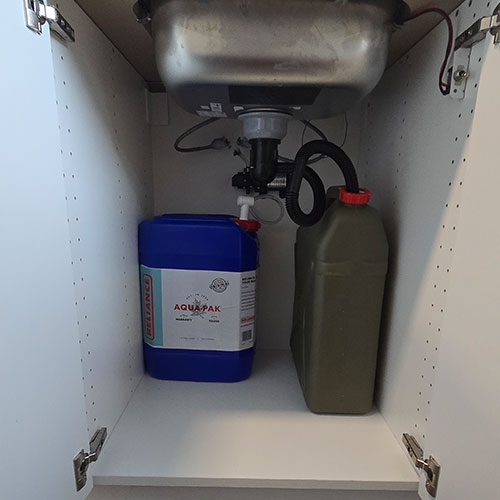
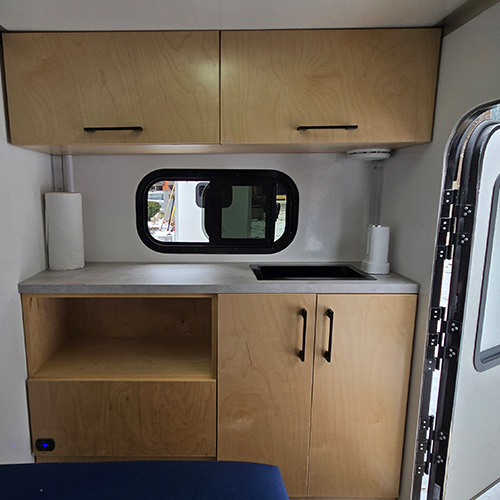
- Running water
- Sleeping area
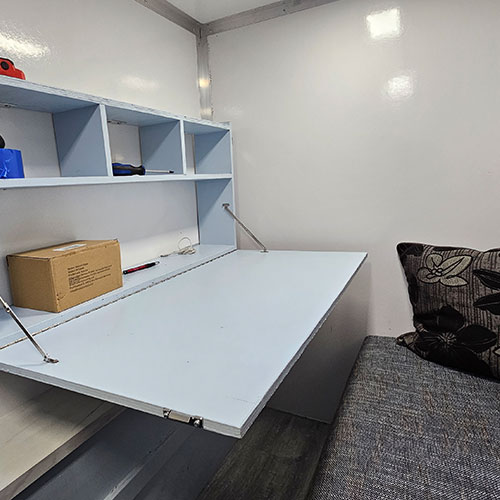
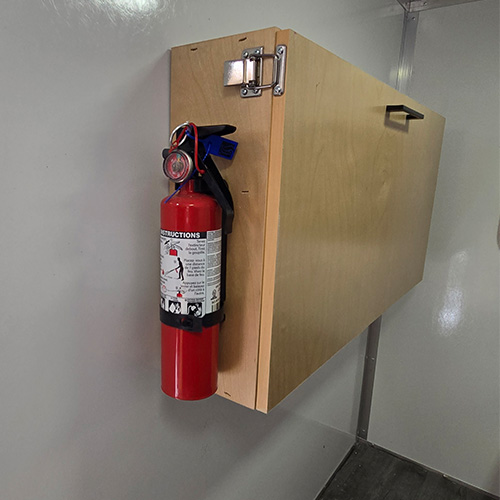
- Interior desk/work surface
Although still experimental, V2 represented a more realistic version of what an ultra-mobile emergency shelter could become.
What Prototype V2 Represented
This unit marked a turning point in the early days of Tiny Tiny Homes.
It took the lessons from the original pedal-powered model and used them to create something safer, more efficient, and more practical.
While no longer produced, Prototype V2 helped set the stage for the larger, trailer-based designs that came afterward.
It shows how the project grew out of humble beginnings: experimenting, improving, and always trying to do better for people in need.